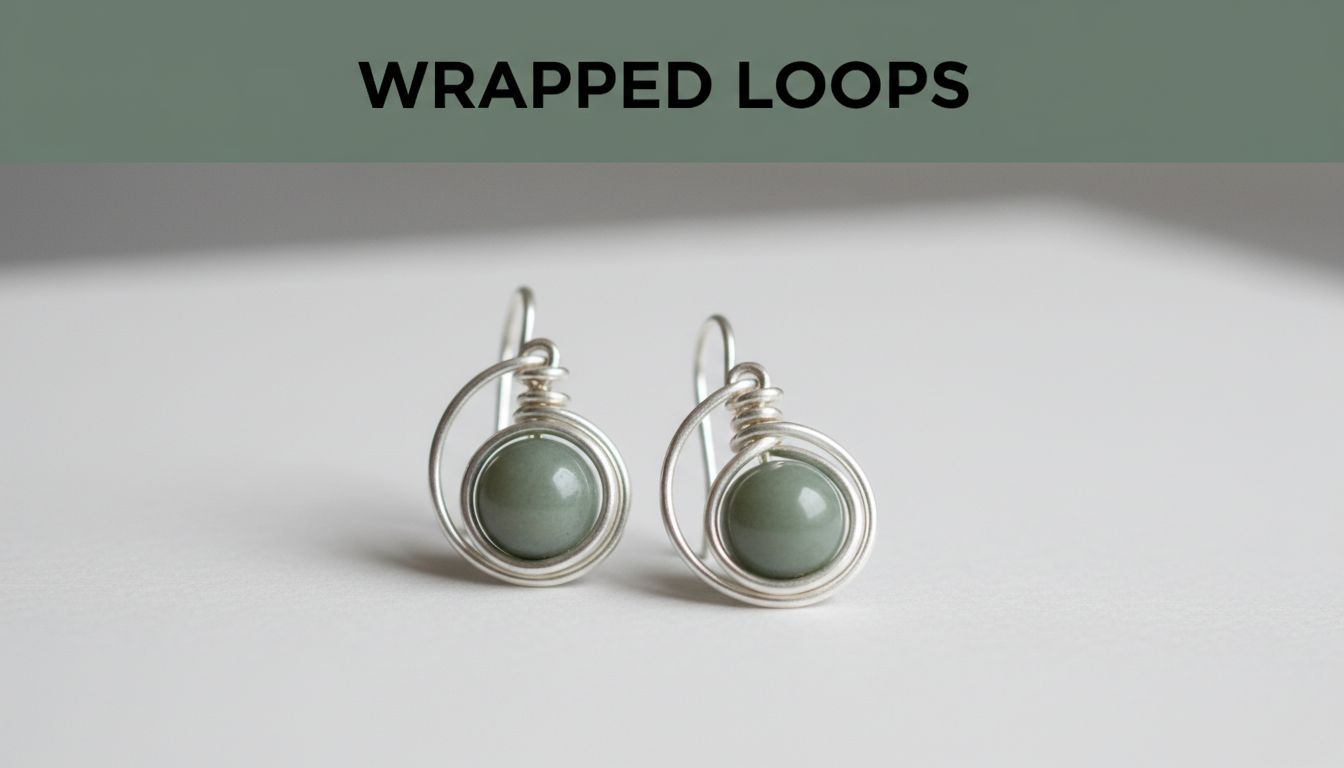
You drop one earring on the floor during a busy morning rush. It rolls under the couch, gone forever. That frustration hits hard when a favorite pair slips off because the loop opens. A wrapped loop fixes this issue. You form a simple wire loop, then wrap the end around the base for a tight hold.
This technique adds security to earrings. It prevents drops during wear. Your designs look pro and last longer. Beginners love it because the steps stay simple. You need basic tools and practice. In short, wrapped loops turn shaky findings into reliable pieces. Follow along for the full process.
Why Wrapped Loops Beat Simple Loops for Earring Security
Simple loops work at first. They form a basic circle to hook onto ear wires. Over time, though, they slip open. Movement pulls them apart. Dangling styles or heavy beads make it worse.
Wrapped loops change that. You wrap extra wire around the base stem. This creates friction. It locks everything in place. Pros rely on this method. They avoid customer complaints about lost parts.
Think of it like a shoelace knot. A single loop unties easily. Add wraps, and it stays secure all day. Your earrings handle daily wear better. They swing without worry.
Durability tops the list. Wraps add strength against tugs. You gain confidence in custom designs. Styles vary too. Tight wraps suit studs. Looser ones fit fancy drops.
Daily life tests jewelry. Sweat, hair products, and bumps loosen plain loops. Wraps resist all that. Your pieces endure showers or workouts. Friends notice the quality. They last seasons, not weeks.
In addition, wraps boost style. Silver wire gleams against beads. Gold tones match findings. You create matching sets easily. Security meets beauty here.
Beginners see fast results. Practice builds skill. Soon, you upgrade from basic posts to statement pieces. Simple loops serve starters. Wrapped ones mark real progress.
Your Must-Have Tools and Materials List
Gather these items before you start. They keep things smooth and safe.
You need 20-24 gauge half-hard wire. Thinner suits small loops; thicker holds heavy beads. Cut 2-3 inches per earring.
Round-nose pliers shape perfect circles. The tapered jaws let you control size. Pick ones with smooth grips.
Chain-nose pliers pinch closes and wrap tails. Flat jaws grab without marring wire.
Wire cutters snip clean ends. Avoid scissors; they crimp wire.
Add ear wires or findings. French wires work for drops. Simple hooks fit studs.
Optional beads or charms add flair. String them before looping.
Eye protection stays key. Wire snaps can fly. Work in good light.
Brands like Beadalon or Eurotool offer starter kits. Hobby stores stock them cheap. Start with a 10-foot wire spool. It makes dozens of pairs.
Prep your workspace. A soft mat prevents slips. These tools cost under $30 total. They serve necklaces too.
Cut and Prep Your Wire Piece
Start with a straight piece. Measure 2-3 inches. This leaves room for the loop and wraps.
Use cutters flush against the spool. Snip once. Straighten on a table. Roll it under fingers.
Kinks ruin shapes. Straight wire wraps even. Check twice before forming. Beads need extra length.
Form the Base Loop Shape
Grip round-nose pliers. Place wire end 1/4 inch from the smaller jaw.
Roll forward smoothly. Make a full circle. Slide off the jaw.
Check roundness. Oval loops slip. Bend gently to fix. Size fits snug on ear wires, about 2-3 mm.
Practice matches both sides. Consistent size looks pro.
Slide On and Secure to Your Earring Finding
Open the loop wide. Slip it onto the ear wire loop or chain.
Pinch with chain-nose pliers. Close until no gap shows.
Tug lightly. It holds firm now. Wrap next for lockdown.
Wrap the Wire for That Extra Lock
Hold the stem steady. Grip with chain-nose pliers right below the loop.
Take the tail end. Wrap downward around the stem. Do 3-5 tight turns.
Keep them close. No spaces between. Use thumb for tension.
Hand position matters. Pliers in one hand, wire in the other. Pull snug each time.
Trim, Tuck, and Polish the Finish
Snip excess tail close to the last wrap. Leave 1 mm stub.
Press the end in with chain-nose pliers. Tuck it under wraps. It hides smooth.
File rough spots if needed. Give a final tug test.
No movement means success. Practice on scraps first builds speed.
Fix Common Mistakes and Level Up Your Technique
Loose wraps happen early. Pull tighter next time. Tension holds them firm.
Uneven loops come from loose grips. Hold pliers steady. Roll in one motion.
Poking ends irritate skin. Tuck deeper. File smooth always.
Thinner wire fits mini studs. 26 gauge works there. Patina adds antique style. Dip after finishing.
Make multiples at once. Batch loops save time. Pair with gemstone beads for sales.
This skill transfers easy. Try bracelets or pendants. Experiment freely. Your secure earrings impress.
Common fixes build confidence. Soon, mistakes vanish. Pros add coils or spirals. Start simple, grow bold.
Ready to Make Earrings That Stay Put
You now know wrapped loops inside out. Cut wire, form the loop, slide on findings, wrap tight, and finish clean. These steps secure your designs against drops.
Grab tools and try a pair today. Custom earrings beat store buys. Share your first makes in comments below. What bead combo will you pick?
The joy of handmade lasts. Your secure pieces spark compliments. Keep creating.