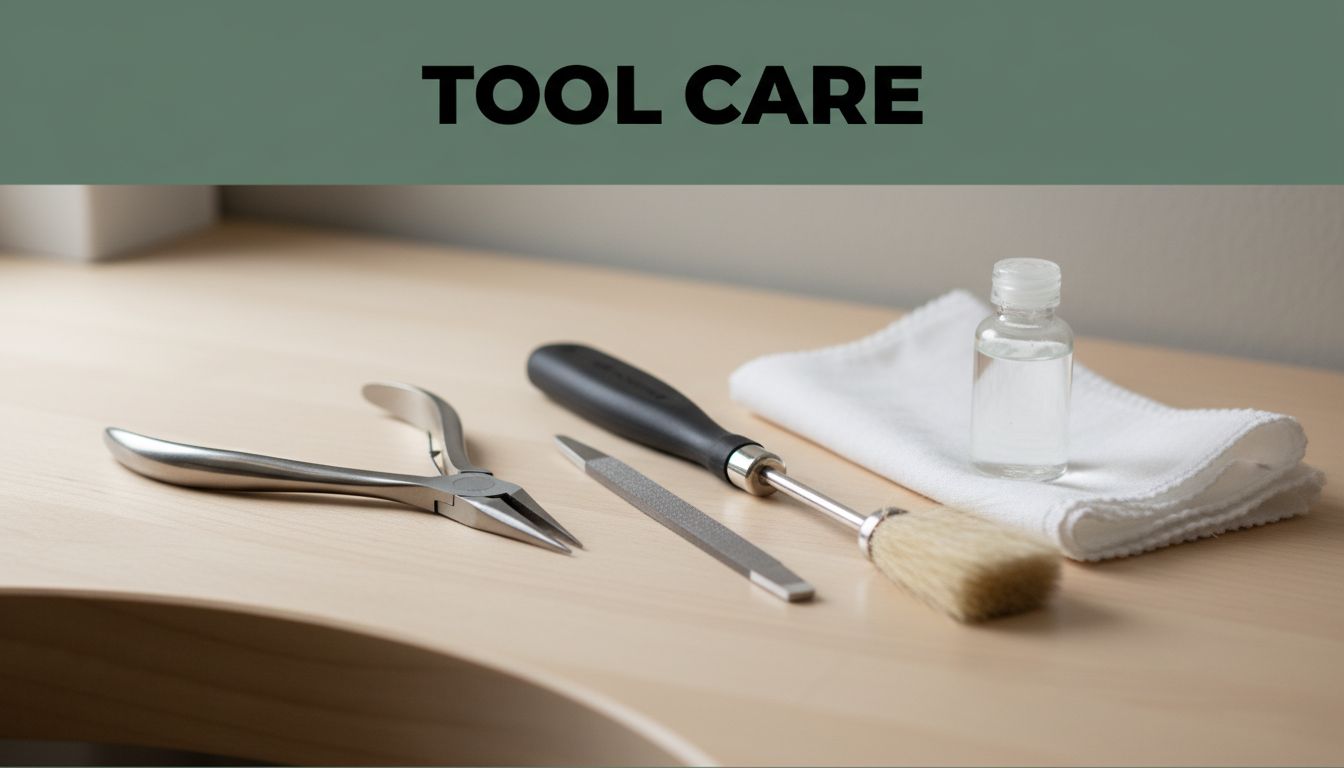
Picture this. You reach for your go-to pliers during a big jewelry project. Rust flakes off right onto your delicate chain. The whole mood crashes.
Dirty tools lead to sloppy work. They dull fast, slip in your grip, and break pieces you spent hours on. Good care fixes that. Your tools stay sharp, projects flow smooth, and you save cash on new buys.
This guide walks you through it all. You’ll learn the payoffs, supplies to grab, cleaning steps for key tools, daily routines, storage smarts, and traps to skip. Let’s get your kit in top shape.
Why Taking Care of Your Jewelry Hand Tools Pays Off Big Time
Clean tools last longer. A well-kept pair of pliers or file can handle years of use. Without care, they wear out in months. For example, quality jewelry tools often serve 5 to 10 years with regular maintenance. Neglect them, and you’re replacing them every one or two.
Precision improves too. Sharp cutters make clean snips on wire. Grippy pliers bend metal without marring it. You get pro-level results on rings or bracelets. No more uneven cuts or scratched surfaces that ruin the finish.
Safety goes up as well. Rusty handles slip easy. Dull edges force harder pressure. That leads to pinched fingers or flying bits. Maintained tools grip firm and cut true. Your workspace stays safer.
Workflow speeds along because of this. You finish pieces faster. Customers notice the quality. Over time, you build a rep for flawless work. Plus, fewer replacements mean more money for materials or new designs.
Think about your last project snag. Dull files left burrs everywhere. A quick clean routine changes that. Tools perform like new. You focus on creating, not fighting gear.
Gather These Everyday Supplies Before You Start Cleaning
Stock up on basics first. These items clean without scratching soft metals like silver or gold. You find most at dollar stores, hardware shops, or online for under $20 total.
Soft microfiber cloths top the list. They lift dirt and oil without lint or scratches. Skip paper towels; they leave fibers behind.
Mild dish soap mixes with warm water for safe suds. It cuts grease on handles and jaws. Use a drop or two; more foams too much.
A soft-bristle brush, like a toothbrush, scrubs crevices gently. Nylon bristles won’t gouge metal.
Isopropyl alcohol (70% or higher) wipes hinges clean. It evaporates fast and fights bacteria buildup.
Light machine oil or WD-40 Specialist keeps moving parts smooth. A tiny drop prevents squeaks and rust.
Cotton swabs reach tight spots. Dip them in alcohol or soap for precision cleaning.
Baking soda paste tackles tough grime. Mix with water for a mild abrasive on stubborn spots.
Wooden toothpicks clear debris from file teeth. They won’t dull edges like metal picks.
Lint-free wipes finish the job. They polish dry without streaks.
These picks work because they’re non-abrasive. Harsh cleaners pit finishes. Cheap sources keep costs low. Grab extras; they last through many sessions.
Basic supplies laid out on a workbench, ready for jewelry tool cleaning.
Step-by-Step Cleaning Guide for Your Most-Used Jewelry Tools
Start every session the same way. Wipe off loose debris with a dry microfiber cloth. Disassemble parts if you can, like plier jaws. Work in a well-lit spot. Plan 5 to 10 minutes per tool. Clean weekly if you craft daily. Always dry fully after washing. Moisture breeds rust.
Reviving Pliers, Cutters, and Wire Snippers
Soak jaws in warm soapy water for 5 minutes. The suds loosen filings and oils.
Scrub with your soft brush. Focus on teeth and cutting edges. Rinse under running water.
Dry each part with a microfiber cloth. Pat hinges extra well.
Dip a cotton swab in isopropyl alcohol. Wipe hinge pins clean. Let it air dry a moment.
Add one drop of machine oil to each hinge. Work the tool open and closed to spread it. Wipe away excess.
Polish handles with a dry cloth. They shine up fast.
Skip dishwashers; heat warps grips. Harsh chemicals eat metal too.
For more on plier care, check Rio Grande’s tool maintenance tips.
Sharpening Up Files, Saws, and Rasps
Brush out metal shavings first. Use the soft-bristle brush in one direction, along the teeth.
If grease coats them, wash lightly with soapy water. Rinse quick and dry right away.
Stuck debris needs baking soda paste. Rub gently, rinse, and dry thoroughly.
Hang files when done. They stay sharp without teeth matting together.
Never soak fine files. Water softens teeth and dulls them fast.
Store saw blades separate. Wrap in cloth to protect cuts.
Restoring Hammers, Mallets, and Punches
Dampen a cloth with soapy water. Wipe faces and handles. No soaking needed.
Dry immediately. Buff metal with a clean cloth for shine.
Nylon or wood mallets get alcohol wipes for stains. It cleans without swelling wood.
Check heads for looseness. Tighten with a gentle tap if needed.
Skip abrasives on striking faces. They create flat spots over time.
Caring for Mandrels, Ring Clamps, and Polishing Tools
Pick out residue with a toothpick. Alcohol on a swab follows for polishers.
Wash mandrel tapers with mild soap. Dry completely; they rust easy.
Vacuum polishing wheels first. Spot clean with a brush and alcohol.
Inspect for wear. Replace worn bobs before they shred buffs.
Group clamps by size. Wipe threads to keep them smooth.
Build Habits for Daily Care and Smart Long-Term Storage
Wipe tools right after use. A 2-minute cloth pass removes sweat and metal dust. It prevents buildup.
Oil hinges weekly. One drop per joint keeps action crisp.
Do deep cleans monthly. Follow the steps above for a full refresh.
Store smart. Tool rolls or foam-lined boxes protect tips. Divided trays sort pliers from files.
Keep everything in a cool, dry spot. Basements trap humidity; use silica packs instead.
Label sections for quick grabs. Group by task, like bending or cutting.
Travel kits get padded pouches. They shield tools in bags.
Good habits extend life. Your kit stays ready for any project.
Organized jewelry tool storage in a divided wooden box, dust-free and accessible.
Pitfalls to Dodge and Quick Fixes for Tool Troubles
Leave tools wet, and rust forms overnight. Dry ASAP next time.
Abrasive cleaners scratch finishes. Switch to soft brushes and soap.
Over-oil leaves gunk. Wipe excess after applying.
Poor storage causes dings. Add felt protectors between pieces.
Rust spots appear? Soak in vinegar 10 minutes, scrub, oil up.
Sticky hinges? Flush with alcohol, dry, re-oil lightly.
Dull edges need pro sharpening. Don’t file them yourself.
Ignore wear, and accidents follow. Check tools before each use.
Prevention beats fixes. Stay consistent for trouble-free crafting.
For common rust remedies, see this guide from Jewelry Making Journal.
Regular care keeps your tools reliable. Clean often, store right, and they reward you with smooth projects every time.
Start your routine today. Grab a cloth and hit one tool now. Better jewelry awaits.
Share your go-to cleaning hack in the comments. Subscribe for more tips on buying jewelry tools. Happy making!