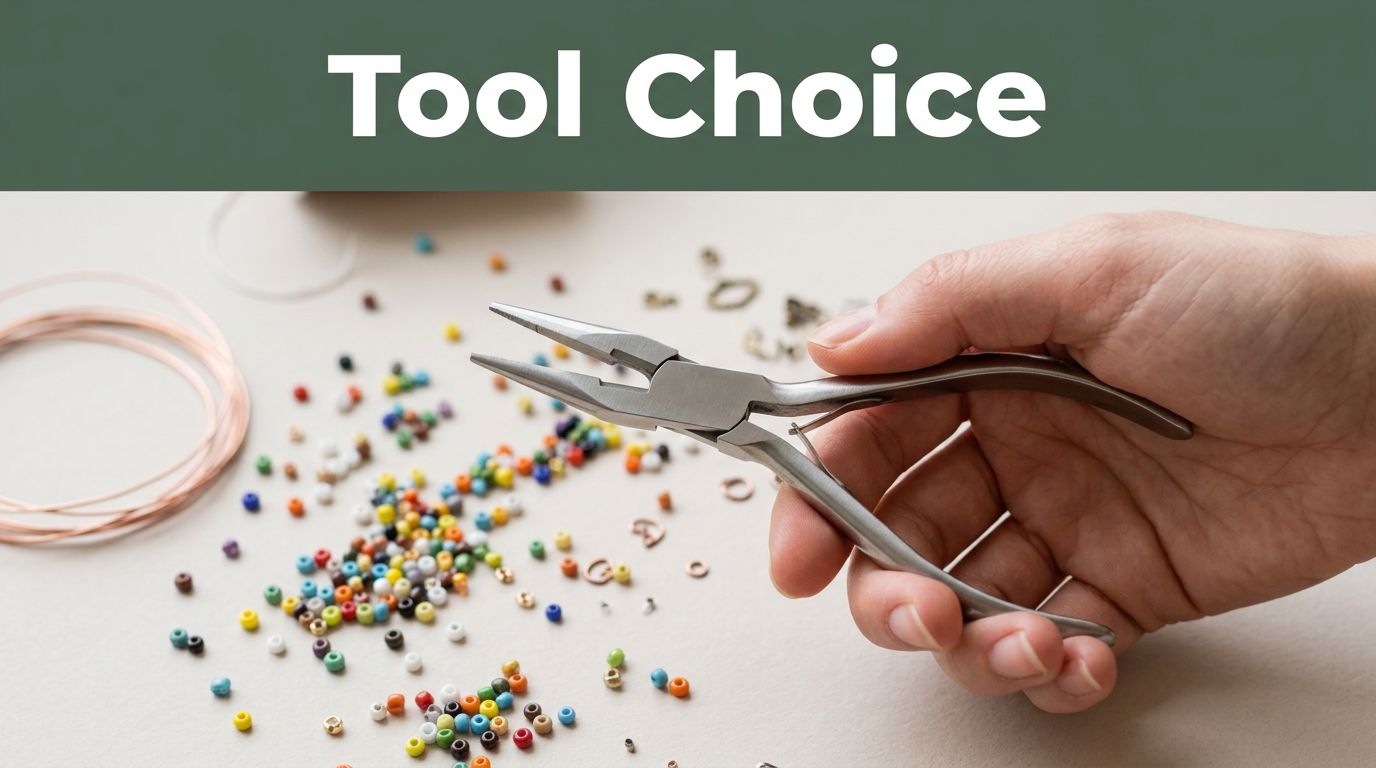
Picture this: you sit down with beads, wire, and findings, ready to craft your first bracelet. Excitement builds as you imagine wearing it. Then, the wrong tool slips, scratches your wire, or cramps your hand. That frustration kills the fun fast.
Jewelry pliers for beginners form the backbone of any starter project. They let you grip, bend, and cut with precision. Pick the right ones, and you save time, money, and headaches. Beginners often grab cheap hardware store pliers. Those have teeth that mar soft metals. They feel awkward on tiny parts. Instead, focus on tools made for jewelry.
This guide covers the essential types, key features, how to match them to projects, and smart buying tips. You’ll gain confidence to start creating. Let’s dive into the types first.
The Essential Types of Jewelry Pliers Every Beginner Should Know
Four core pliers handle most beginner tasks. They cover wire work, beading, and assembly. A basic set tackles 90% of projects. Think of their jaws like fingers: round ones curl, pointed ones pinch, flat ones press.
These tools work together seamlessly. For example, you cut wire first, then shape it, grip beads last. Start with these, and you build skills quickly.
Round-Nose Pliers for Creating Smooth Loops and Curves
Round-nose pliers have tapered, cone-shaped jaws. They bend wire into perfect circles. Use them for ear wires or bracelet loops.
The jaws narrow to fine tips. This helps make consistent sizes. Finer tips suit small work like pendants. They’re essential for wire projects because loops must match.
Practice on scrap wire. Grip near the base for bigger loops. Move toward the tip for tiny ones. Soon, your wraps look pro.
Chain-Nose Pliers for Gripping Tiny Parts Without Slips
Chain-nose pliers feature flat fronts that taper to points. They hold beads steady or close jump rings tight. Bend wire ends too.
Smooth interiors prevent scratches on soft metals. Unlike needle-nose from hardware stores, these stay precise. They’re perfect for beading and final assembly.
Hold a bead between jaws. It stays put without marks. In addition, they reach into tight spots easily.
Flat-Nose Pliers for Secure Holds on Flat Pieces
Flat-nose pliers offer broad, smooth jaws. Grip sheet metal firmly or set stones in place. Straighten bent wire fast.
They press findings flat without dents. Pair them with round-nose for full shaping. Comfort matters during long sessions.
For instance, flatten a clasp base. The jaws distribute pressure evenly. As a result, your piece looks clean.
Flush Cutters for Clean Wire Trims
Flush cutters have sharp, angled blades. They slice wire with one flat side. No frayed ends mar your finish.
Unlike diagonal cutters, these leave clean cuts. Use on soft jewelry wire only. Hard materials like guitar string can chip blades.
Safety first: point away from your body. Cut close to the work for neat results. They’re key for professional edges.

Key Features That Turn Basic Pliers into Beginner Favorites
Good pliers go beyond shape. Look for features that ease use and boost results. They cut hand fatigue in long sessions. For example, during beading marathons, comfort wins.
Focus on grips, jaws, joints, springs, and size. These make tools last and perform. Therefore, check them before buying.
Ergonomic Handles with Cushion Grips
Padded handles fit small hands well. They prevent blisters on extended projects. Oval shapes feel natural.
Non-slip grips stay secure even with sweaty palms. Besides, they reduce strain. You’ll work an hour without pain.
Smooth, Polished Jaws Free of Teeth
Mirror-polished jaws glide on metal. No teeth means no gouges on gold or silver. Hardware pliers ruin pieces fast.
Polished surfaces grab just right. In contrast, rough jaws slip or scratch. Always inspect for shine.
Box-Joint Construction for Stability
Box joints overlap fully. They resist wobble over time. Lap joints loosen quicker.
This design keeps jaws aligned. Precision stays sharp for years. Most importantly, it suits fine work.
Return Springs to Save Your Fingers
Leaf springs snap jaws open after squeezes. Great for crimping dozens of beads. Some let you remove them.
They speed repetitive tasks. However, test without first. Find what feels best.
Compact Size Suited for Fine Jewelry Work
Aim for 4.5 to 5.5 inches long. They offer control on tiny parts. Oversized ones feel clumsy.
Short lengths tire hands less. Still, they pack power. Perfect balance for starters.
Match Your Pliers to the Perfect First Project
Pick pliers by project type. Start simple to build skills. Three easy ones suit beginners.
You’ll need cutters always, plus grippers or shapers. Excitement grows when tools fit the task.
Simple Beaded Bracelet: Focus on Grippers and Cutters
String beads on elastic or wire. Crimp ends secure.
Chain-nose hold crimps tight. Cutters trim excess clean. Flat-nose helps optional presses.
Steps: slide beads on, crimp one end, add clasp. Repeat. Done in 30 minutes.
Wire-Wrapped Pendant: Loops and Precision
Wrap wire around a stone or cabochon.
Round-nose forms wraps and loops. Chain-nose holds steady. Cutters finish ends.
Tuck tails smooth. Practice coils first. Your pendant shines.

Earwire Pair: Shaping with Round and Flat
Bend wire into hooks.
Round-nose curves the loop. Flat-nose straightens the stem. Cutters trim sharp ends.
File tips round for safety. Wear them proud.
Shop Smart: Find Quality Pliers Without Breaking the Bank
Budget $20 to $50 for a starter set. Four-piece kits offer value. Look for jewelry-specific stainless steel.
Craft stores or online spots stock them. Read reviews for jaw polish and spring quality. Avoid dollar store junk; it bends easy.
Maintain with oil on joints. Store dry to fight rust. A little care lasts years.
Sets save cash over singles. Start there, upgrade later.
Your first piece awaits with the right jewelry pliers. Master the types, features, project matches, and smart buys. Grab a four-piece set today.
Confident now? Try that beaded bracelet. Share your project pics or questions in comments. Subscribe for more beginner tips. Create something beautiful. You’ve got this.