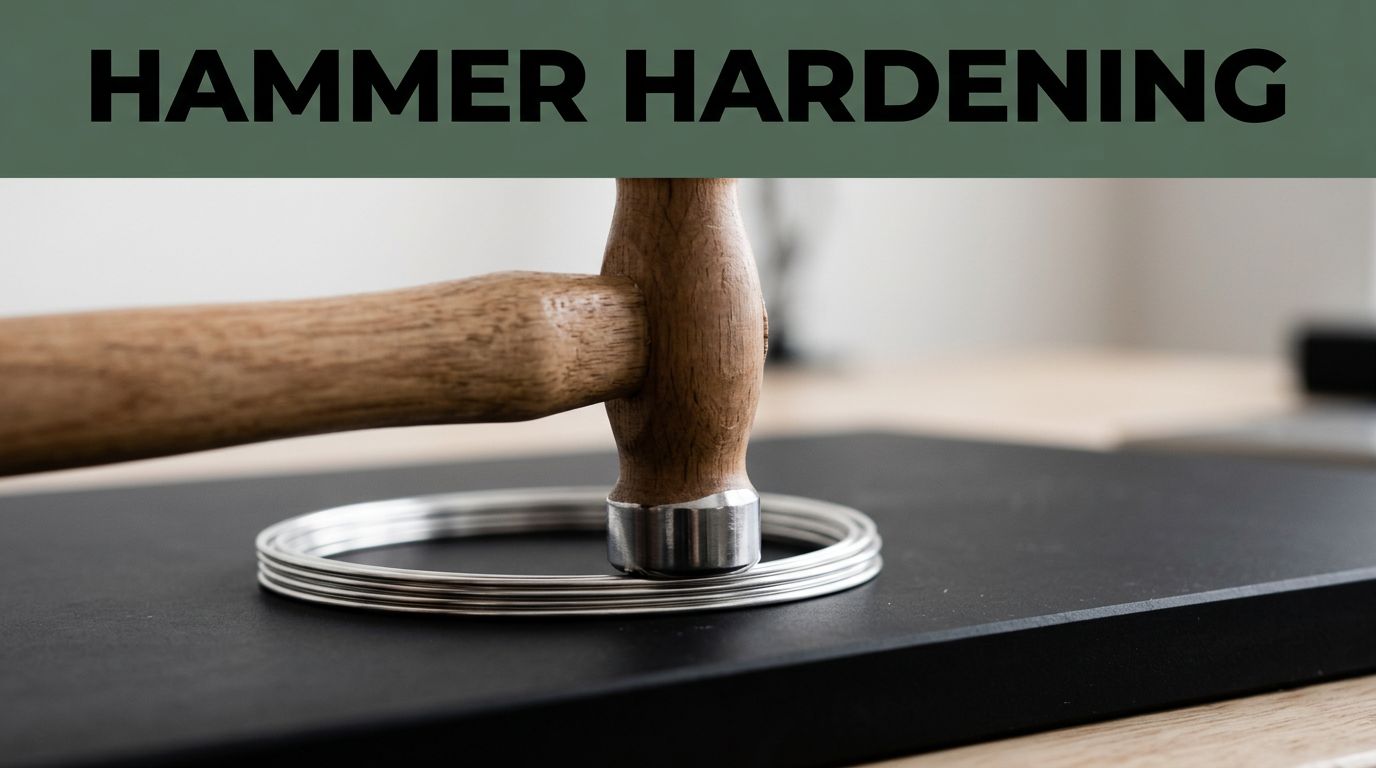
Picture this. You spend hours crafting a wire-wrapped ring. It looks perfect until you wear it. The loops flop loose. That bendy wire ruins everything. Many jewelry makers face this issue. But there’s a fix. You can harden wire with a chasing hammer. This tool packs light blows to stiffen metal fast. No heat or fancy gear needed.
A chasing hammer stands out with its flat face and long handle. It gives control for precise work. Results beat soft wire every time. Your wraps stay tight. Shapes hold firm. You get pro results at home. This post breaks it down. We start with tool features. Then cover setup and safety. Next come step-by-step instructions. Finally, pro tips await. You’ll master this skill soon. Why keep struggling with floppy designs?
Key Features of a Chasing Hammer That Make Wire Hardening Easy
Chasing hammers shine for wire work. They have a flat, polished face. This spreads force evenly. No dents or marks on your piece. The long handle adds swing control. You tap light without tiring. The other end often has a ball peen. Use it for texture if you want. But for hardening, stick to the flat side.
Compare it to other hammers. A ball peen works okay but lacks precision. Cross peen suits nails, not delicate wire. Chasing hammers fit jewelry best. They weigh 8 to 16 ounces usually. Light enough for control, heavy for effect.
Work-hardening happens because repeated taps stretch metal crystals. The wire gets stiffer over time. Start with dead-soft wire always. It responds best. Half-hard skips some steps but limits shape options. Quality matters too. Pick one with high-carbon steel head. It lasts longer.
For more on hammer design, see Ganokin’s guide to chasing tools.
Picking the Right Chasing Hammer for Your Wire Projects
Choose based on a few key factors. Weight runs 8 to 16 ounces. Lighter suits beginners. Heavier packs more punch for thick wire. Handle length hits 10 to 12 inches. It gives leverage without bulk.
Head shape counts. Flat face hardens smooth. Avoid rounded ones for this job. Brands like Fretz or ImpressArt suit starters. They hold up well. Steer clear of cheap imports. They chip easy.
Expect to pay $20 to $60. Buy from sites like Rio Grande jewelry supplies. Here’s a quick spec list:
- Weight: 8-12 oz for control, 12-16 oz for power.
- Handle: Wood or nylon, 10-12 inches long.
- Head: High-carbon steel, flat face polished.
- Price: $25 average for solid entry-level.
Test swing before buying. It should feel natural.
The Simple Science Behind Stronger Wire
Hammering deforms metal lightly. Crystals inside shift and lock. Wire stiffens as a result. Think of a paperclip. Bend it back and forth. It fights return after a bit.
You control the hardness. Light taps make half-hard. More build full-hard. It works on copper, fine silver, or gold-filled. Copper takes least effort. Sterling needs steady rhythm.
No heat involved. That’s the beauty. Just tap and check.
Set Up Your Workspace Right for Safe Hammering
Prep your spot first. A stable table prevents slips. Good lighting shows details. Non-slip mat keeps tools in place. These basics make hammering smooth.
Core tools include a steel bench block. It bounces strikes back even. Safety glasses top the list. They block flying bits. A bench pin or vise holds wire steady. Soft mallet straightens first.
Wire gauges 18 to 24 gauge work best. Thicker needs more taps. Secure everything. Then you hammer free.
Check Fire Mountain Gems’ hammering setup tips for visuals.
Essential Tools Beyond the Hammer
You need a few extras. Steel bench block anchors strikes. Textured side grips if slick. Files smooth burrs after. Chain-nose pliers shape wire.
Mandrel straightens coils. Clamp or vise locks it down. Budget picks run cheap at hardware stores. Pro versions last years.
Here’s what fits most budgets:
| Tool | Budget Option | Pro Option | Why It Helps |
|---|---|---|---|
| Bench Block | $10 steel plate | $30 textured anvil | Even rebound |
| Safety Glasses | $5 basic | $15 wraparound | Eye protection |
| Mandrel | $8 stepped rod | $25 precision set | Straight wire |
| Files | $5 needle set | $20 jewelry grade | Smooth edges |
Pick what matches your skill. Start simple.
Safety Rules You Never Skip
Risks include flying metal chips. Hand slips hurt too. Noise builds up fast. Glasses stay on always. Secure wire tight. Start with light taps only.
Gloves help grip but slow feel. Wear ear plugs for long sessions. Keep area clear. First aid kit nearby for cuts.
If hit, clean wound. Apply pressure. Most mishaps heal quick. Practice builds safety habits.
Step-by-Step Guide: Harden Wire Perfectly Every Time
Follow these steps for stiff wire. Time runs 5 to 10 minutes per piece. Great for wraps or bails. Even coverage matters most.
- Cut and straighten wire. Use dead-soft. Coil on mandrel. Tap gentle with mallet.
- Secure on bench block. Clamp ends or tape down.
- Tap with flat face. Light blows first. Rotate often.
- Build pressure. Medium taps next. Cover all sides.
- Test bend. Repeat if soft.
Troubleshoot bends with re-straighten. Cracks mean stop.
Prep Your Wire and Secure It Firmly
Start with dead-soft wire. Anneal copper if work-hard before. Straighten on mandrel. Unwind slow.
Place on flat block. No rebound loss. Tape ends or vise grip. Firm hold prevents slips. Gauge 20 suits most.
Master the Hammer Strikes for Uniform Hardness
Use wrist flicks. Hold at 45 degrees. Start 1 ounce pressure. Tap lengthwise first. Then cross.
Keep steady rhythm. Rotate quarter turns. For curves, shape on mandrel first. Then harden.
One foot pounds means overdo. Aim controlled.
Test Hardness and Know When to Stop
Bend 90 degrees. No yield means good. Soft still folds easy. Springy fights back.
Scale it: dead-soft bends free, full-hard springs. Cracks signal stop. Rest wire 1 minute between rounds.
Pro Tips and Fixes for Flawless Results
Thicker gauges need passes. 18 gauge takes double time. Thin 24 gauge taps delicate. Rotate extra for even.
Mistakes happen. Too-hard first hit flattens. File smooth. Uneven spots get extra love.
Clean hammer with steel wool. Store dry. Silver work-hards like copper. But polish after.
Practice on scrap. Builds speed.
See Halstead Bead’s wire hardening tutorial for video demos.
Handling Different Wire Sizes and Metals
Gauge guides effort. 20 gauge medium taps. 24 gauge feather light.
Copper easiest. Sterling silver next. Gold-filled tougher.
| Metal | Ease | Taps Needed | Notes |
|---|---|---|---|
| Copper | Easy | Light-medium | Colors fast |
| Sterling | Medium | Medium | Tarnish watch |
| Gold-filled | Hard | Heavy | Thin only |
| Fine Silver | Easy | Light | Soft start |
Match to project.
Quick Fixes for Common Hammering Goofs
Wavy wire? Re-straighten on mandrel. Soft spots? Extra taps there.
Dull hammer face? Polish with 0000 steel wool. Flat spots file gentle.
Over-hard cracks? Start over with new piece.
Ready to Harden Wire Like a Pro?
You now know the best way. Pick a quality chasing hammer. Set up safe. Follow steps: prep, secure, tap even, test. Pro tips fix issues fast.
Stronger wraps and shapes wait. Grab scrap wire. Try today. Share your results in comments. What’s your next project? Subscribe for more tips like wire wrapping basics. Your jewelry levels up now.