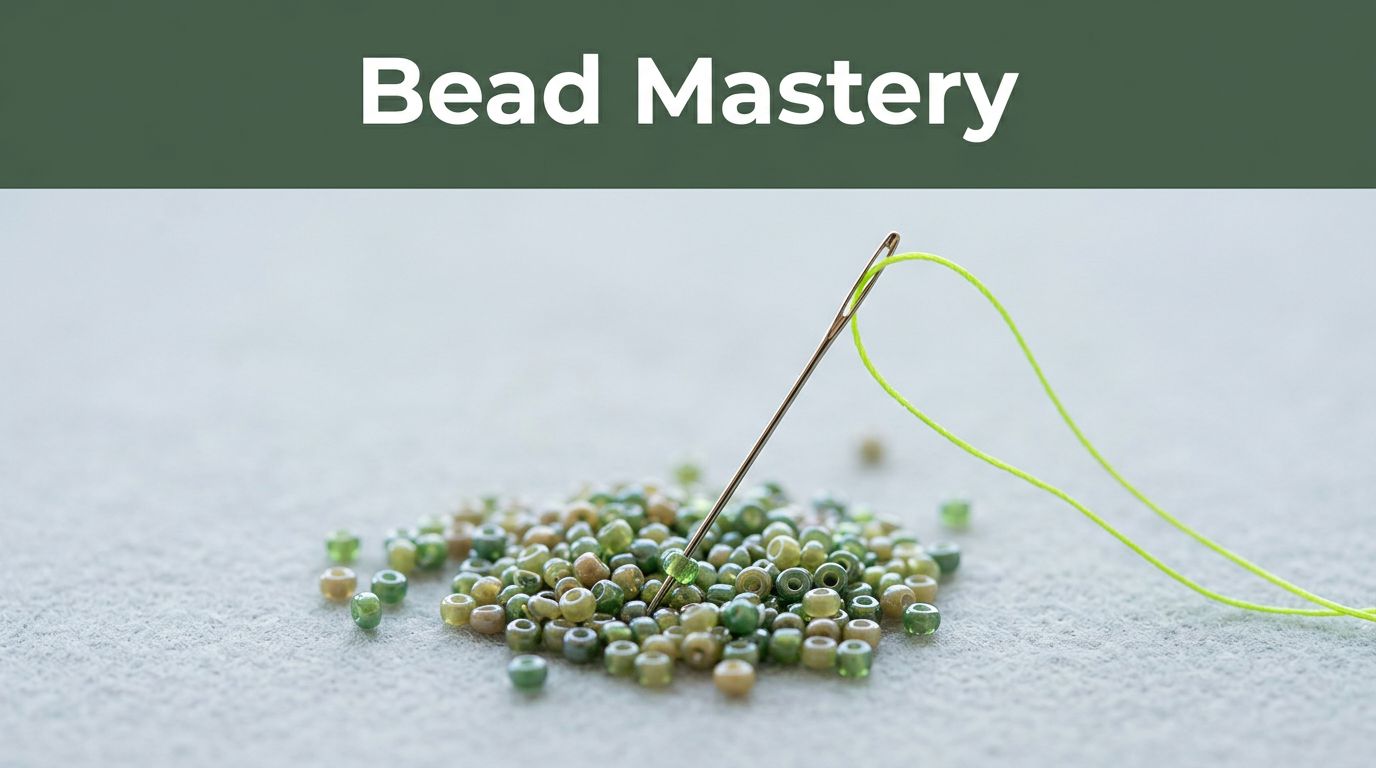
Picture this: you sit down to make a delicate bracelet from shimmering seed beads. Excitement builds as you grab your supplies. Then frustration hits. Those tiny holes refuse to accept your thread. Small seed beads in sizes like 11/0 or 15/0 test every crafter’s patience.
A beading needle solves that problem fast. Its thin shaft and large eye let you string beads smoothly. You avoid splits and snags. This guide gives you a full tools list, simple steps, and pro tips. You’ll finish projects quicker with neat results. Ready to turn beads into jewelry? Start with the right supplies.
Gather These Must-Have Supplies for Success
Stock up on basics before you begin. Each item plays a key role in smooth stringing. Miss one, and you’ll waste time fixing issues.
Beading needles top the list. Go for sizes #10, #11, #12, or #13. They fit small bead holes best. Flexible twisted-wire types, like Big Eye needles, work great too. Next, pick strong thread. Nymo, Fireline, or PowerPro in size B or D slides easy and holds up. Grab small seed beads from 8/0 to 15/0. Japanese or Czech brands offer uniform holes for even results.
You’ll also need sharp scissors, a bead mat or tray to stop rolling, and optional beeswax for grip. Buy these affordably at craft stores or online. For example, check Fire Mountain Gems for beading needles. Match your needle size to bead holes. A snug fit prevents wobbles.
Pick the Perfect Beading Needle for Your Bead Size
Needle choice depends on bead size. Short, straight needles suit tight spaces. Long ones handle bigger projects. For 11/0 to 15/0 beads, pick #12 or #13. They thread fast and flex less.
Big Eye needles shine for beginners. Their wide eye grabs thread easy. Straight needles give control; curved ones reach awkward spots. However, skip sewing needles. They bend or break. Store needles in a case to avoid dull tips.
Choose Thread That Glides Through Tiny Holes
Thread must be thin yet tough. Waxed nylon like Nymo grips beads well. Gel-spun options such as Fireline resist fraying. Always select the thinnest size that fits your needle.
Condition thread with beeswax. It adds smoothness and strength. Cut an arm’s length to start. Too long, and it tangles. See Beading Daily’s thread comparison for more options.
Follow This Simple Process to Thread and String Beads
Now you have supplies. Time to string. Work at a table with good light. Keep beads off the floor to avoid loss. Patience pays off your first try.
Follow these steps in order. Each builds on the last.
- Cut your thread to arm’s length. This length stays manageable.
- Pass one end through beeswax two or three times. Roll it between fingers until smooth.
- Tie a small overhand knot if you want a stop. Lay the thread on your bead mat.
Prep and Wax Your Thread End
Waxing keeps thread straight. It stops fraying too. Smooth ends slide into the needle eye faster. Lay everything flat on the mat now.
Slide Thread Through the Needle Eye with Ease
Hold the needle steady in one hand. Moisten the thread tip with saliva, or use a threader. Push the end through the eye. Pull it through, then double back four to six inches. No knot here yet. Tug gently to secure.
Add Seed Beads One by One Smoothly
Pick up a bead with the needle tip. Slide it down to the end. Repeat the motion. Build rhythm as you go. Check for twists every few beads. If a bead sticks, inspect the hole size. Larger needles help stubborn ones.
Close-up of needle picking up and sliding a small seed bead onto waxed thread.
Finish Strong Without Losing Your Work
Reach your desired length. Slide the needle off. Tie two or three overhand knots close to the beads. Trim excess thread. Add a clasp or loop next. Your strand holds firm.
Master These Tricks to Avoid Tangles and Frustration
Even pros hit snags. These tips save time. Practice them to string faster.
Use a bead stopper first. It keeps beads from falling off. Work over a shallow bowl to catch drops. Moisten fingers for better grip on beads. Rotate your project often. This stops twists.
Start with larger beads like 8/0. Build confidence before tiny ones. Good lighting shows holes clear. Pre-string sections for long pieces.
For supplies like uniform beads, try Fusion Beads Japanese seed beads.
Quick Fixes for When Beads Won’t Go On
Beads jam sometimes. Enlarge the needle eye with fine wire. Swap to a bigger needle or thinner thread. Check bead quality; some have rough holes. Clean them with a reamer if needed.
Prevent Tangles and Keep Your Thread Straight
Finger-spool loose thread. Control tension with your off hand. Avoid over-twisting by smoothing often. Add a stop bead at the start. It anchors everything.
Beader using stopper and mat to keep seed beads organized.
Master these, and beading feels effortless.
You now know how to use a beading needle to string small seed beads. Gather supplies, follow the steps, and apply tricks. Results look professional every time.
Try a simple bracelet today. String 11/0 beads in one color for fun. Share your photos in the comments. What project comes next? Subscribe for more beading ideas. Crafting brings joy; let beads sparkle on your wrist.