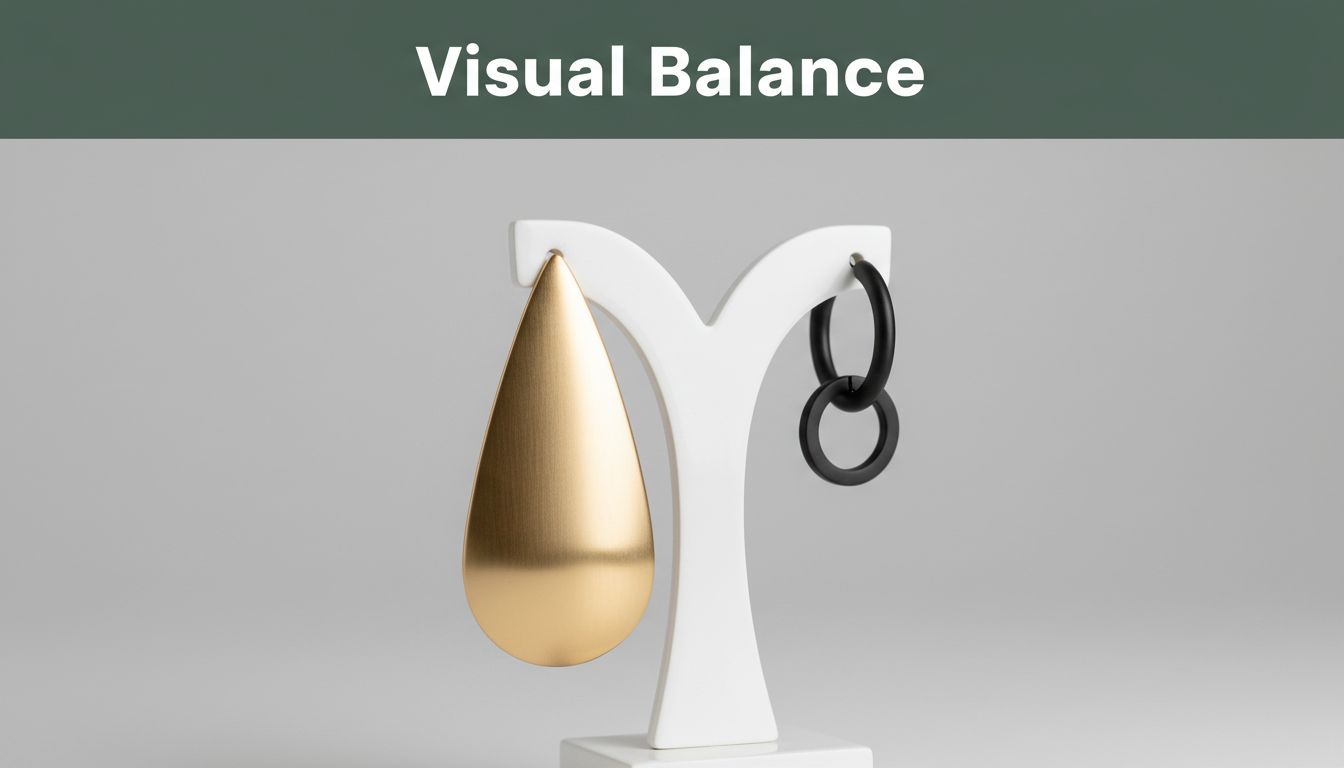
Asymmetrical earrings grab attention and add that perfect edge to any outfit. You slip them on, expecting a bold, modern vibe. But if the balance feels off, they end up looking lopsided and distracting instead.
Visual weight controls this. It describes how elements like size, color, or shape pull the eye in a design. Bigger pieces, darker hues, or busier shapes carry more weight, so you must counter them to create harmony.
Master it, and you craft earrings that feel balanced yet exciting. Wearers love pieces that sit right and flatter the face. Designers stand out with work that’s both artistic and comfortable.
In this post, we start with the basics of visual weight. Next, we cover key principles to apply it. Then, hands-on techniques help you build pairs step by step. We dodge common pitfalls along the way. Finally, real examples spark your ideas.
Stick around, and you’ll gain simple tools to make your asymmetrical earrings shine. Let’s balance things out.
Grasp Visual Weight Basics to Elevate Your Designs
Visual weight gives the sense of heaviness to parts of your design. It pulls the eye based on how elements look, not their real mass. For example, a large black gem demands more focus than a tiny clear bead, just like a big dark rock overshadows a small light pebble on the ground.
You control balance in asymmetrical earrings through five main factors. Size matters first because bigger drops or hoops carry more pull. Darker or bolder colors weigh heavier than pastels. Angular or spiky shapes grab space over smooth curves. Textures like rough beads or chains add density. Placement counts too; lower or central spots anchor stronger.
In earrings, these play out across left and right ears at equal heights. Your face shape influences it as well. A narrow face handles bold contrasts better. Meanwhile, round faces benefit from softer matches.
Test it yourself right now. Grab a chunky chain and a slim wire. Hold one near each ear in a mirror. See how the chain tugs your gaze? That proves visual weight in action. Once you spot it, your designs improve fast.
Spot the Factors That Tip the Scale in Earring Designs
Start with size. Larger elements dominate because they fill more space and demand attention. Picture a big teardrop on one side next to a stud. The drop pulls hard, making the pair tilt visually. In your favorites, check hoops versus small pearls. Bigger always wins heft. Balance it with multiples on the light side, like three tiny charms.
Next, color shifts the scale. Black onyx or deep ruby outweighs soft pink tourmaline every time. Dark hues absorb light, so they feel solid. Pastels reflect it and stay airy. Note this in pairs you own. A bold cobalt stud fights a cluster of ivories. Match intensity across sides for even sit.
Shape changes everything. Spiky prongs or jagged edges claim room unlike fluid curves. A star-cut gem overpowers a round one. Viewers sense tension in points. Smooth ovals relax the eye. Examine trendy pairs; angular drops need curved counters.
Finally, density from texture builds weight. Rough hammered metal or knotted chains pack punch over polished stones. Bumpy surfaces catch light unevenly, adding bulk. Glossy finishes lighten up. Jot notes on loved designs. Dense left means sparse right.
These quick checks reveal patterns. Use the table below for side-by-side views.
| Factor | Light Example | Heavy Example |
|---|---|---|
| Size | Small stud (under 1cm) | Large hoop (over 3cm) |
| Color | Pastel beads (pink, mint) | Dark gems (onyx, garnet) |
| Shape | Smooth pearl drop | Spiky crystal point |
| Density | Polished wire chain | Rough bead cluster |
Spot these in your collection. Adjust one factor at a time for better flow.
Why Asymmetry Demands Extra Attention to Balance
Asymmetrical designs shine when weights match, but they flop fast without it. Your ears sit level on the face. So, a heavy left drop drags the eye down or sideways. The right stays empty, creating chaos. Viewers notice right away.
Your brain craves harmony. It scans for even pull. Imbalance distracts; people fixate on the tilt instead of the style. In short, poor balance kills the vibe. Therefore, you counter one bold side with smart lights.
Trends back this up. Jewelry forums note asymmetrical earrings jumped 40% in searches last year. Buyers want edge, but comfort wins. So, pros nail balance to stand out.
For example, pair a chunky black hoop left with scattered gold chains right. Both sides claim space without fighting. Face shape tweaks it too. Oval faces forgive mismatches. Square jaws need tighter equals.
Test your work this way. Hold the pair to a mirror. Step back, then close one eye. Turn side to side. Does it hang steady? Tweak until yes. Also, snap photos straight-on and angled. Apps magnify flaws.
In addition, wear them yourself. Walk around; feel the swing. Comfort confirms balance. As a result, your pieces flatter every wearer. Skip this step, and distractions rule. Master it, though, and asymmetry becomes your strength.
Apply Core Principles to Harmonize Uneven Sides
You spot uneven visual weight in your asymmetrical earrings. Now apply three timeless principles to fix it: counterweighting, proximity, and continuity. Counterweighting makes the lighter side busier with more elements. Proximity clusters items closer together on the light side to pack punch. Continuity echoes small motifs across both sides for smooth links. Together, they create natural flow so pairs feel even without matching exactly.
Counterweighting works best for size gaps. Pros include quick fixes and bold contrast; cons mean over-busying risks clutter. Use it when one side has a big focal piece. Proximity shines for scattered designs. It adds density fast, but too tight feels stiff, so space lightly. Pick it for dangling styles. Continuity builds unity subtly. Pros offer elegance; cons require matching materials. Go for it on textured pairs.
These principles stack well. Start with counterweighting, add proximity clusters, finish with continuity echoes. Your designs gain polish fast. Picture a lopsided pair transforming into a stunner. Before, one side dominates; after, harmony rules. Test them, and watch wearers rave.
For easy reference, save this cheat sheet: jot principles on a card with pros/cons and examples. Pin it by your bench. Next, we break them into hands-on tips.
Counterweight Small Elements with Bold Details
Pair a tiny stud on one ear with a chunky chain or vivid gem on the other. This counters light weight fast. For instance, match a long thin dangle to a short beaded cluster. The busy side grabs equal eye share.
Think simple math: visual area should roughly match. A small element needs bold details to compete. Limit scale difference to 1.5x max. Go bigger, and it overwhelms.
Try these swaps:
- Slim wire drop versus stacked beads.
- Single pearl against etched metal links.
You balance without bulk. The light side stays delicate, yet pulls even. Wearers notice the smarts, not the tilt. Test in a mirror; adjust chains until eyes rest flat.
Harmonize Colors So Sides Feel Equal
Colors carry weight too. Warm tones or high contrast feel heavier, so soften the busy side with pastels. This evens the pull. Gold hoop with ruby looks punchy; counter with silver and pearls for airiness.
Link sides through analogous schemes. Blues next to greens flow smooth. Reds demand cool grays opposite.
Grab a color wheel app to test. Spin hues; preview combos on your sketch. Does the heavy side lighten? Perfect.
Examples pop:
- Deep emerald drop meets mint beads.
- Bold coral cluster pairs with soft blush studs.
Colors unite without copies. Your pairs flatter skin tones better. Viewers sense calm, not chaos. Tweak saturation first; desaturate heavies for instant wins.

Caption: Pastels lift the light side for even feel.
Shape and Texture Tricks for Seamless Flow
Shapes shift weight quick. Round forms soften; geometric ones sharpen focus. Soften spiky left with oval right drops. Textures help too: matte finishes lighten, while shiny or etched add heft.
Mirror shapes subtly across ears. Wavy wire one side meets coiled other for rhythm.
Key tricks include:
- Smooth pearls against faceted crystals.
- Polished chain versus hammered links.
This creates flow. The eye glides, not jerks. Proximity helps: cluster textures close on light sides.
You gain depth without symmetry. Pros love wavy-geometric mixes for modern edge. Test swing; textures affect drape. Nail it, and pairs move graceful.
Step-by-Step Process to Balance Your Own Creations
Grab your sketchbook and tools. This seven-step workflow balances asymmetrical earrings in just 1-2 hours. You sketch, test, tweak, and repeat until perfection hits. Iteration saves time and prevents flops, so your designs shine on real ears. First, follow the steps. Then, dive deeper into prototyping and testing.
Here’s the simple sequence:
- Sketch a full face view. Draw your face straight-on with ears level. Add rough earring shapes. This sets the baseline so you see imbalances early.
2. **Assign weights to elements.** Label size, color, shape, and texture on each side. Score them 1-10 for heaviness. Spot the tilt right away. 3. **Adjust sizes and colors.** Boost the light side with more beads or pastels. Shrink heavies or lighten shades. Redraw until scores match. 4. **Prototype with cheap materials.** Twist wire or mold clay for quick mocks. Skip gems; focus on form. 5. **Wear and photo from afar.** Put them on for 30 minutes. Check mirror, selfies, and distance shots. Note hair or necklace clashes.

Caption: Test prototypes in real wear to catch hidden issues. 6. Tweak iteratively. Swap parts based on photos. Repeat steps 4-5 two or three times. Small changes fix big pulls. 7. Get friend feedback. Show three trusted eyes. Ask if it looks even from across a room. Fresh views confirm wins.
You finish fast because each step builds on the last. Pros swear by this loop; it turns rough ideas into keepers. Stay patient, and your pairs hang perfect.
Prototype and Test for Real-World Wear
Start prototypes cheap. Grab craft wire, polymer clay, or paper clips. Mold the heavy side first, then match the light. Skip costly stones; test structure only. This keeps costs under $5 and lets you scrap flops easy.
Wear them 30 minutes straight. Move your head, talk, smile. Feel the pull? Earrings shift with motion, so real tests beat sketches.
Check three ways:
- Mirror close-up. Tilt head side-to-side. Does one side droop?
- Selfie straight-on. Zoom out; crop to shoulders. Balance pops or fails here.
- Distance view. Step 10 feet back or use phone timer. Hair curtains or necklaces interfere often, so pin them up.
Spot issues fast. Thick hair adds weight to one side; tuck it. Bold necklaces fight drops, so test solo. Adjust on the spot: add clay beads or bend wire. Retry wear. In short, this proves balance before final build. Your designs wear flawless as a result. {“sectionTitle”: “Steer Clear of Balance Killers with These Fixes”, “imageIntent”: “before and after comparison of asymmetrical earrings with overloaded left side fixed by trimming beads and redistributing”, “prompt”: “Split image showing before-and-after asymmetrical earrings on a model: left side overloaded with too many beads around a central gem making it heavy, right side light chains; after shows trimmed left with 20-30% fewer beads redistributed to right for balance, model face straight-on neutral expression, earrings visible clearly, workbench background with tools, bold branded editorial style with one large headline ‘Fix Overload’ in Title Case using bold geometric sans-serif font on single edge-to-edge muted dark-green horizontal band near top (15-20% height), clear focal subject below split comparison, consistent background tone in warm neutrals, even line weights, high contrast text, no extra text or decorations”}
Steer Clear of Balance Killers with These Fixes
You nail the steps and prototypes. Still, balance slips away fast. One overloaded side kills the vibe. Other errors creep in too. So, fix them quick. We’ll hit the top mistake first. Then cover five common ones with symptoms, causes, and fixes. Real designer stories show the pain. A checklist seals it at end. Your pairs stay even every time.
Fix Overloaded Sides That Throw Everything Off
New designers pile beads on one side to counter a big piece. It backfires. That side dominates with clutter. The eye locks there; balance vanishes.
Trim 20-30% right away. Spread the rest to the lighter side. Space them out for even pull.
Redo example: Left holds 12 chunky beads plus a quartz focal. Right gets slim chains only. Pull four beads from left. Add two small ones midway on right chains. Test in mirror. Weights even out. The pair flows smooth now.

Caption: Trim and spread for instant evenness.
Overloading ranks as mistake number one. But four more lurk. Spot them below.
Here are five balance killers. Each packs symptoms, causes, and quick fixes:
- Overcompensating so one side dominates. Symptom: Eye sticks to busy side; pair tilts. Cause: Too many elements chasing a heavy focal. Fix: Cut items by quarter, shift half opposite.
- Ignoring face asymmetry. Symptom: Earrings clash with uneven jaw or brows. Cause: Treat face as perfect oval. Fix: Mirror test from three angles; boost weak side.
- Uniform elements with no counter. Symptom: Sides match size/color but feel off. Cause: Identical beads lack contrast play. Fix: Vary shapes/textures; add density clusters.
- Neglecting motion so it swings uneven. Symptom: Dangles flop side-to-side in wear. Cause: Skip swing tests. Fix: Walk 10 minutes; shorten heavy drops or weight light chains.
- Poor material match. Symptom: Weights shift in light. Cause: Glossy vs matte ignores shine heft. Fix: Match finishes; dull bold side, shine the light.
Designers share flops. Sarah added beads to fight a hoop. Her left sagged; sales tanked. She trimmed, sales doubled. Mike skipped face checks. Pairs suited half his testers. Angle tests fixed it. Tom used same pearls both sides. Flat look bombed. Shape swaps saved it. Lisa forgot motion. Earrings tangled at parties. Shorten tests worked. Jen mismatched gold to silver. Light flipped in sun. Finish swaps won.
Run this checklist before final glue:
- Trim extras 20-30%? Yes/No
- Face angles even? Yes/No
- Counters vary? Yes/No
- Swing test passed? Yes/No
- Materials match heft? Yes/No
Check twice. Balance sticks. Your asymmetrical earrings wow every time. {“sectionTitle”: “Break Down Celeb and Designer Wins”, “imageIntent”: “Zendaya-inspired bold asymmetrical earrings on model: chunky gold chain left heavy with thick red arrow pointing down, delicate pearl strands right light with thin blue arrow up balancing, straight-on face view”, “prompt”: “Model with neutral expression wearing bold asymmetrical earrings, left chunky thick gold chain earring heavy side with thick downward red arrow annotation indicating visual weight, right delicate thin pearl strands light side with thin upward blue arrow annotation balancing it, face straight-on equal height ears, high-res close-up shoulders up, natural studio light, bold branded editorial style with one large headline ‘Bold Balance’ in Title Case using bold geometric sans-serif font on single edge-to-edge muted dark-green horizontal band near top (15-20% height), clear focal subject below, consistent background tone in warm neutrals, even line weights, high contrast text, no extra text or decorations, arrows clean simple lines no labels”} {“sectionTitle”: “Break Down Celeb and Designer Wins”, “imageIntent”: “colorful asymmetrical earrings example on model: vibrant gem drop left heavy purple arrow, multicolored bead cluster right light green arrows balancing”, “prompt”: “Model wearing colorful asymmetrical earrings, left single large vibrant turquoise gem drop heavy with thick purple downward arrow annotation, right scattered small multicolored beads light with multiple thin green upward arrows balancing, straight-on view clear earrings, high-res, natural light, bold branded editorial style with one large headline ‘Color Pop’ in Title Case using bold geometric sans-serif font on single edge-to-edge muted dark-green horizontal band near top (15-20% height), clear focal subject below, consistent background tone in warm neutrals, even line weights, high contrast text, no extra text or decorations, arrows simple no text labels”} {“sectionTitle”: “Break Down Celeb and Designer Wins”, “imageIntent”: “textural asymmetrical earrings with sustainable materials: rough recycled metal left heavy orange arrow, smooth eco-gem right light yellow arrows balancing”, “prompt”: “Model in asymmetrical textural earrings using sustainable materials, left rough hammered recycled silver metal cluster heavy with thick orange downward arrow, right smooth lab-grown green gem on chain light with thin yellow upward arrows balancing, straight-on portrait, workbench hints in background, high-res detail on textures, bold branded editorial style with one large headline ‘Texture Win’ in Title Case using bold geometric sans-serif font on single edge-to-edge muted dark-green horizontal band near top (15-20% height), clear focal subject below, consistent background tone in warm neutrals, even line weights, high contrast text, no extra text or decorations, arrows clean”} asymmetrical earrings trends 2024 2025 Pinterest sustainable materials jewelry Zendaya Met Gala earrings asymmetrical designs Zendaya Met Gala asymmetrical earrings Pinterest jewelry trends 2025 asymmetrical earrings sustainable best asymmetrical earrings designers celebs Etsy indie
Conclusion
You now spot visual weight factors like size, color, shape, and texture.
You apply principles such as counterweighting, proximity, and continuity.
These tools create harmony in asymmetrical earrings.
Follow the seven-step process to sketch, prototype, and test.
Steer clear of pitfalls like overloading or ignoring motion.
Your pairs hang even and feel right on any face.
Grab our free sketch template and checklist download below.
Build one balanced pair this week.
Share your creation on social with #BalancedAsymmetry.
Balanced asymmetry turns heads without tipping scales.
Wearers notice the edge and comfort.
Go make yours shine.