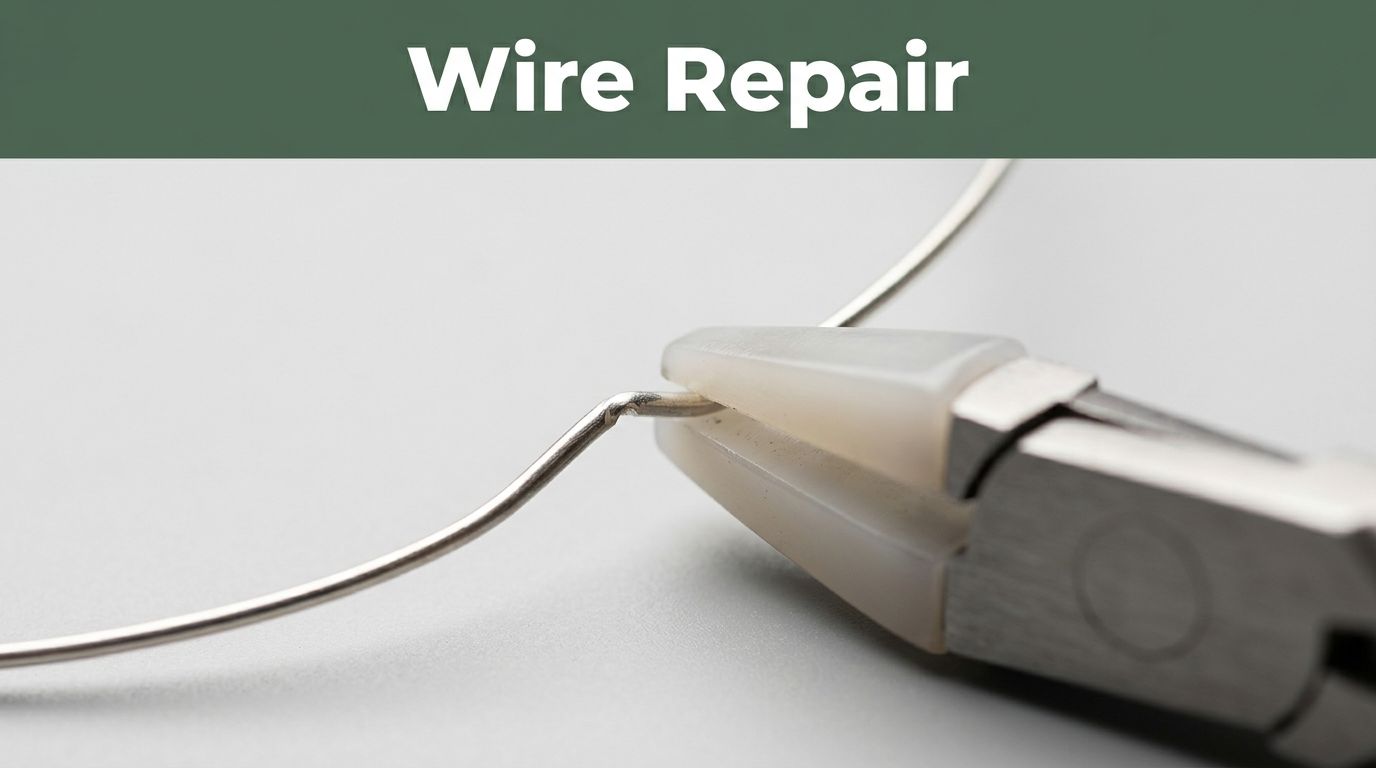
You pull out your favorite necklace after months in storage. A sharp kink twists the chain right in the middle. It happened from tight coiling or daily wear that caused unnoticed bends.
Kinks form easily in jewelry wire. Twisting during use or poor storage leads to these problems. Fixing them keeps the shine and value intact. You risk scratches or breaks if you force it wrong.
This guide shows safe home methods. Use nylon pliers or cloth rolls with basic tools. Follow these steps, and you’ll save your pieces without harm.
Check Your Wire Type and Kink Severity First
Start here before any fix. Know your wire type and kink level. That choice prevents worse damage.
Jewelry wire comes in tempers like dead soft, half-hard, or full-hard. Dead soft bends easiest, like cooked spaghetti. Half-hard holds shape better but kinks deeper. Full-hard stays stiff, so kinks resist fixes.
Check visually first. Look for shallow bends that flex back a bit. Measure gauge with calipers if unsure. Thinner wires, like 24-gauge, kink faster than thick 18-gauge.
Force a bad kink, and you snap the wire. Assess severity to pick the right approach. Patience pays off.
Spot the Difference: Fixable Kink or Total Loss?
Shallow bends spring back when you press gently. Those kinks work well with tools.
Deep creases show cracks or gouges. Wire snaps under light pressure in those cases. Discoloration or brittleness signals trouble too.
Try a soft bend test. Hold ends and curve slowly. If it resists without breaking, proceed. Otherwise, replace the section. Save time and avoid frustration.
Match the Method to Your Wire’s Temper
Dead soft wire straightens with minimal effort. Just guide it gently.
Half-hard needs steady pulls. Don’t rush or you’ll add scratches.
Full-hard often fights back. Light repeated passes work best. Start soft on every type.
Here’s a quick guide:
| Wire Temper | Ease of Straightening | Best Pressure |
|---|---|---|
| Dead Soft | Very Easy | Light |
| Half-Hard | Moderate | Medium |
| Full-Hard | Challenging | Light, Repeated |
Match your method to this. Test on scrap first.
Gather Gentle Tools That Protect the Finish
Cheap metal tools scratch fast. Pick items that grip without harm.
Nylon jaw pliers top the list. Soft cloth works next. Add a wooden dowel or knitting needle for curves. Finish with a polishing cloth.
Gloves help you grip better. They prevent slips too. Buy quality pieces. DIY pad regular pliers with cloth if needed.
These tools keep gold, silver, or plated surfaces pristine. Invest once for many fixes.
Why Nylon Pliers Change Everything
Nylon jaws grip tight without marring. They suit thin chains or bracelets.
Flat jaws handle small gauges best. Brands like Xuron offer replaceable pads. Test on scrap wire first. No marks mean you’re set.
Regular pliers bite in. Nylon spreads force evenly. You’ll see smoother results every time.
Handy Extras for Smooth Results
Microfiber cloths roll wire clean. Lay flat on glass for straight pulls.
Wire straightener blocks hold pieces steady. Use them optional for pros.
These add ease. Prep now for quick wins later.
Master the Step-by-Step Nylon Pliers Fix
This core method works on most kinks. It takes 5 to 10 minutes per section. Go slow for best results.
Secure the piece first. Isolate the kink if on a long chain. Work in a lit area.
Grip one end firm. Slide pliers along the bend. Pull straight while rotating slightly. Repeat light passes.
Think of uncoiling a tight spring. Hand positions stay perpendicular. Pressure stays even.
Success comes from patience. New kinks form if you rush.
Set Up for Success and Grip Right
Clear a soft mat workspace. No hard surfaces that dent wire.
Cut the kinked spot if needed. Or clamp ends secure.
Position jaws perpendicular to wire. Grip 1 inch from the bend. Slide slow.
Pull, Rotate, and Repeat Until Straight
Pull taut first. Twist pliers a quarter turn. Release and check.
Do passes from both ends. Alternate angles for even fix.
Use a straight edge to measure progress. Stop when flat.
Polish and Inspect for a Flawless Finish
Buff right after with microfiber. Shine brings back luster.
Check under bright light. Flex gently for hidden kinks.
Repeat if needed. Your piece looks new now.
Try These Backup Tricks for Stubborn Spots
Pliers fail sometimes. Switch to these for tough kinks.
Cloth rolling suits delicate wires. Dowel fixes curves best. Anneal memory wire with low heat if you know how.
Skip torches. Beginners burn finishes easy. Stick to safe options.
Each trick has pros. Pick by your kink type.
Roll It Out with Cloth and Fingers
Lay wire on thick cloth. Roll back and forth with palms.
Press light for thin pieces. Repeat 10 times per inch.
It smooths without tools. Great for home chains.
Use a Dowel for Curved Kinks
Pick a smooth wooden rod. Match diameter to wire curve.
Wrap loosely around it. Slide off straight end first.
Curves straighten natural. No pulls needed.
Lock in Straight Wire for the Long Haul
Prevention beats fixes. Store right to avoid kinks.
Use boxes or bags. Never coil tight. Twist-ties hold loose shapes.
Spool extras proper. Polish monthly to spot issues early.
Practice on scrap. Build skill before treasures.
Regular care keeps shine. Your jewelry lasts years.
You now know how to straighten kinked jewelry wire safely. Nylon pliers lead the way, with cloth rolls as backup.
Try these on your next tangle. Deep damage calls for pros, though.
Share your fixes in comments. What wire gave you trouble? Subscribe for more tips. Save those pieces today.